There’s something properly magical about hearing Christmas carols, isn’t there? Whether it’s a group of slightly tipsy singers outside Tesco, a packed church service, or just warbling along to “O Come All Ye Faithful” whilst wrapping presents, carols are the soundtrack to British Christmas.
But where did this tradition come from? Why do we sing these particular songs? And is it still legal to carol door-to-door without feeling like you’re bothering everyone?
Let me tell you the story of how medieval religious songs became a cornerstone of British Christmas.
- What Actually Is a Christmas Carol?
- The Medieval Origins of Carol Singing
- The Golden Age: Victorian Carol Revival
- Traditional British Carols Everyone Knows
- Types of Carol Singing in Britain
- The Art of Carol Singing: Why We’re All Terrible at It
- Regional British Carol Traditions
- Modern Changes to Carol Singing
- The Bottom Line
What Actually Is a Christmas Carol?
A carol is a religious song or hymn celebrating Christmas. Simple, right?
Key features of traditional carols:
- Christian themes (Jesus’s birth, angels, shepherds)
- Usually set to simple, memorable melodies
- Designed to be sung by ordinary people, not just trained singers
- Often tell the nativity story
- Verses and choruses structure
But here’s where it gets interesting: Not all Christmas songs are carols. “Jingle Bells”? Not a carol—just a song about snow and sledging. “White Christmas”? Lovely, but not a carol. “Silent Night”? Proper carol.
The difference is religious content. If it’s about the actual Christmas story (Jesus, Mary, shepherds, etc.), it’s a carol. If it’s just about snow, Santa, or having a nice time, it’s a Christmas song.
Though honestly, most people use the terms interchangeably now and nobody cares.
The Medieval Origins of Carol Singing
The word “carol” comes from the Old French “carole,” meaning a circle dance with singing. Originally, carols weren’t specifically Christmas songs—they were any joyful song sung whilst dancing in a circle.
Pre-Christian Influences
Before Christianity arrived in Britain, people sang songs to celebrate the winter solstice. These pagan traditions involved:
- Celebrating the return of longer days
- Feasting and drinking
- Community singing
- Dancing around fires
When Christianity spread through Britain, the church did what it always did with pagan traditions—absorbed them and gave them new Christian meaning.
Early Christian Carols (Medieval Period)
The first proper Christmas carols appeared in the 13th century, written in Latin by monks. They were:
- Serious and formal
- Sung in churches
- Not particularly catchy
- Definitely no dancing
St Francis of Assisi is credited with popularising the idea of Christmas carols as we know them. He encouraged people to celebrate Christ’s birth with joyful songs in their own language, not just formal Latin hymns.
The Problem With Church Authorities
Medieval church authorities weren’t keen on carols initially. Too much fun, too much dancing, too pagan-influenced. They preferred dignified Latin hymns, thank you very much.
But people loved carols. They were fun, memorable, and in English (or Welsh, or Gaelic) rather than Latin. The church eventually gave up fighting it and incorporated carols into Christmas celebrations.
The Golden Age: Victorian Carol Revival
Like most Christmas traditions, the Victorians took carols and ran with them.
What the Victorians Did
Published carol collections:
- William Sandys’s “Christmas Carols Ancient and Modern” (1833)
- “Carols for Christmastide” (1853)
- Countless other compilations
These books collected old carols that had been passed down orally for generations, as well as new compositions. Suddenly, everyone had access to the same carol lyrics and melodies.
Made carol singing respectable:
- Organized church carol services
- School carol concerts
- Community carol singing events
- Carol singing as charity fundraising
Wrote new carols: Many carols we think of as ancient are actually Victorian:
- “Once in Royal David’s City” (1849)
- “O Little Town of Bethlehem” (1868)
- “Away in a Manger” (1885)
- “In the Bleak Midwinter” (1906—technically Edwardian, but close enough)
Charles Dickens helped too: “A Christmas Carol” (1843) featured carol singing as part of Christmas spirit. The whole nation was obsessed with Dickens, so carol singing became even more popular.
Traditional British Carols Everyone Knows
The Top Tier (Everyone Knows These)
“O Come All Ye Faithful” (Adeste Fideles)
- Latin origin, English lyrics added later
- Properly rousing when sung by a full church
- That triumphant “O come let us adore him!” bit
- Works whether you can sing or not
“Hark! The Herald Angels Sing”
- Words by Charles Wesley (1739), music by Mendelssohn
- Opens carol services nationwide
- “Glory to the newborn king!” (everyone shouts this bit)
- Impossible to sing badly
“Silent Night” (Stille Nacht)
- Austrian origin (1818) but adopted by Britain
- The go-to carol for peaceful moments
- Everyone gets emotional singing this one
- Often ends carol services
“Once in Royal David’s City”
- Traditionally starts the Festival of Nine Lessons and Carols
- That opening solo by a chorister child—spine-tingling
- Every British schoolchild has sung this
- Gets more dramatic with each verse
“Away in a Manger”
- Simple, sweet, perfect for small children
- “The little Lord Jesus laid down his sweet head”
- Not actually written by Martin Luther (common myth)
- Primary school nativity staple
“The First Nowell”
- Traditional English carol (exact origins unknown)
- “Nowell” is an old word for Christmas/news
- That repeating “Nowell” chorus everyone loves
- Properly festive
The Second Tier (Most People Know These)
- “While Shepherds Watched Their Flocks By Night”
- “Good King Wenceslas”
- “We Three Kings”
- “In the Bleak Midwinter”
- “O Little Town of Bethlehem”
- “Angels from the Realms of Glory”
- “See Amid the Winter’s Snow”
- “It Came Upon the Midnight Clear”
The Forgotten Verses Problem
Here’s the thing: most carols have loads of verses, but we only sing 1, 3, and 5 (or whatever’s in the hymn book). The middle verses? Lost to time.
Everyone knows the first verse of “Good King Wenceslas.” The other four? Not a clue. But we’ll all confidently belt out verse one, then mumble through the rest.

Types of Carol Singing in Britain
Carol Services at Church
The big one. Churches hold special carol services throughout December, culminating in Christmas Eve services.
What happens:
- Mix of traditional carols and readings
- Often follows a set pattern (like Nine Lessons and Carols)
- Proper singing with organ accompaniment
- Candlelit atmosphere
- Everyone slightly emotional by the end
- Mince pies and mulled wine after
Even non-religious people go because:
- It’s traditional
- The music is beautiful
- Atmospheric and special
- Community event
- Gets you in the Christmas spirit
Festival of Nine Lessons and Carols: The most famous carol service, broadcast from King’s College, Cambridge on Christmas Eve since 1928. Millions listen on Radio 4. It’s an institution.
Structure:
- Nine Bible readings telling the Christmas story
- Carols between each reading
- That opening solo of “Once in Royal David’s City”
- Beautiful, traditional, properly Christmas
School Carol Concerts
Every British school does a Christmas carol concert. Every single one.
Primary school concerts:
- Adorable chaos
- Kids dressed as angels/shepherds/stars
- Someone always cries (usually a parent)
- At least one child waves at mum throughout
- Words forgotten, actions wrong, utterly perfect
Secondary school concerts:
- More polished (sort of)
- Music students showing off
- Awkward teenagers forced to participate
- Actually quite moving when they get it right
- Parents still get emotional
University chapels:
- Proper musical performances
- Beautiful settings
- Open to public
- Often ticketed and popular
Door-to-Door Carol Singing (Carolling)
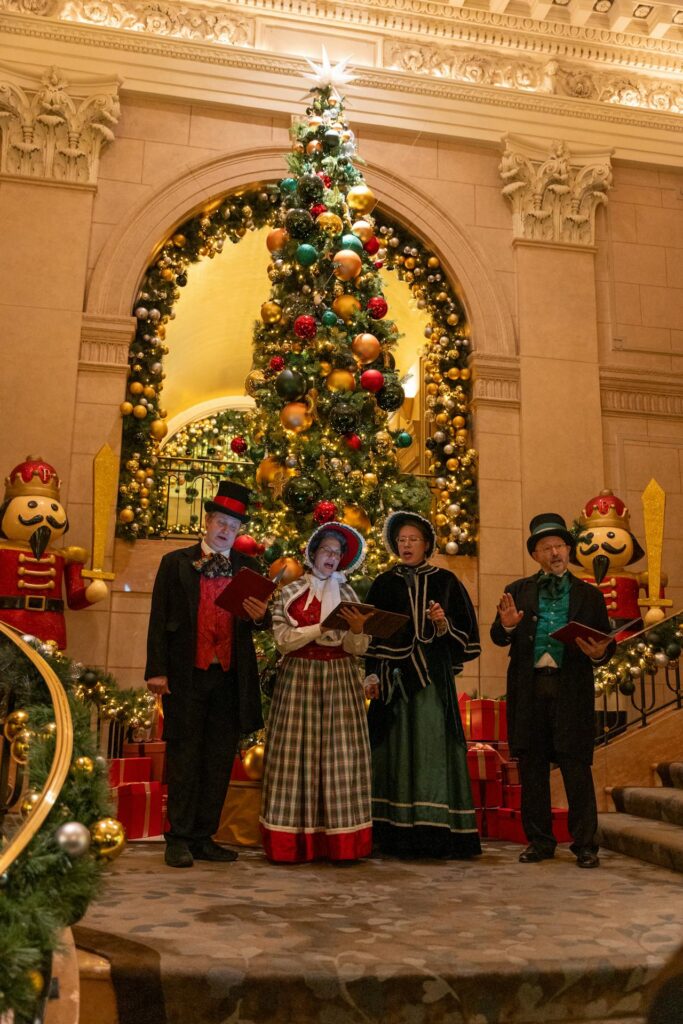
The traditional image: a group going door-to-door singing carols for charity money.
Victorian reality:
- Common and expected
- Raising money for church or charity
- Community participation
- Festive and jolly
Modern reality:
- Much less common
- People worried about bothering neighbors
- Fear of looking daft
- Usually only done by organized groups
If you’re going carolling:
- Go in a proper group (safety and sound quality)
- Carry a lantern or wear hi-vis (health and safety, innit)
- Have a collection bucket for charity
- Know at least one carol all the way through
- Pick well-lit areas
- Don’t ring doorbells after 8pm
- Accept that some people will pretend they’re not home
Where it still thrives:
- Villages and small communities
- Church youth groups
- Scout/Guide groups
- Organized charity events
Pub Carol Singing
Some pubs host carol singing evenings in December. These are brilliant because:
- Alcohol improves everyone’s singing (in their opinion)
- Informal and fun
- Mix of carols and Christmas songs
- No judgment on vocal ability
- Raises money for charity
- Properly festive atmosphere
What happens:
- Someone (often the pub) provides song sheets
- Usually starts around 8pm
- Mix of traditional carols and popular Christmas songs
- “Fairytale of New York” is mandatory
- Gets progressively louder and less coordinated
- Everyone has a brilliant time
Shopping Centre Carol Singers
You see them every December: choir groups or charity collectors singing carols in town centres or shopping malls.
Types you’ll encounter:
- Church choirs (quite good)
- School groups (enthusiastic)
- Salvation Army bands (traditional, brass instruments, collection tins)
- Community choirs (variable quality, maximum enthusiasm)
Most are collecting for charity. Always worth throwing some coins in the bucket—they’re often freezing and working hard.
Carol Singing on TV
“Carols from King’s” (BBC) – The Festival of Nine Lessons and Carols from Cambridge
“Royal Carols: Together at Christmas” – Modern royal family carol service
Christmas TV specials – Loads of shows feature carol singing
Nostalgia factor: Many British people remember watching these with grandparents, making them part of family tradition.
The Art of Carol Singing: Why We’re All Terrible at It
Let’s be honest: most British people can’t really sing. But at Christmas? We don’t care.
Common Carol Singing Problems
Nobody knows all the words:
- First verse: confident
- Second verse: mumbling
- Third verse: just making sounds
- Final verse: loud again (pretend we knew it all along)
Key changes nobody’s prepared for: Carols love throwing in sudden key changes. The congregation attempts to follow. Some succeed. Most don’t. Chaos ensues.
The One Person Singing Harmony: There’s always someone who knows the alto/tenor line and sings it loudly. Everyone else looks confused but impressed.
Speed disagreements: The organist thinks this is a dignified church service. The congregation think it’s a race. Conflict inevitable.
Children shouting rather than singing: They’re enthusiastic. They’re loud. They’re approximately near the right notes. Close enough.
Why We Persevere
Because carol singing isn’t about being good. It’s about:
- Community and togetherness
- Christmas spirit
- Tradition
- Expressing joy (even if slightly off-key)
- That magical feeling when everyone hits the same note
- Memories of singing with people no longer with us
Nobody cares if you’re terrible. Just sing.
Regional British Carol Traditions
Wales
Wales has a particularly strong carolling tradition (Welsh: canu carolau).
Plygain services: Unique to Wales—early morning carol services (sometimes 3-6am!) on Christmas morning. Features:
- Unaccompanied singing
- Welsh language carols
- Small groups (often family) performing
- Ancient tradition still practiced
“Deck the Halls” is Welsh in origin (Nos Galan)
Welsh language carols are stunning, even if you don’t speak Welsh.
Scotland
Scottish carol traditions include:
- Gaelic carols in Highland areas
- “Christ Child Lullaby” (traditional Scottish carol)
- Watchnight services on Christmas Eve
- Carol singing often linked to Hogmanay too
Cornwall
Cornwall has unique traditions:
- Cornish language carols (rare but preserved)
- “Wassailing” traditions
- Community carol singing in harbour towns
- Tom Bawcock’s Eve celebrations (23rd December) with singing
Northern England
- Strong brass band carol tradition
- “While Shepherds Watched” sung to different tunes regionally
- Village carols unique to specific communities
- Competitive carol singing (yes, really)
Modern Changes to Carol Singing
Inclusivity Questions
As Britain becomes more diverse and less religious, questions arise:
Should schools do religious carols?
- Some schools moved to “winter concerts” with secular songs
- Others maintain carol tradition as cultural heritage
- Compromise: mix of religious and non-religious songs
What about non-Christian families?
- Many participate as cultural tradition
- Some opt their children out
- Growing inclusion of songs from other traditions
The consensus: Most people see carols as cultural tradition more than religious requirement. It’s complicated, and we’re muddling through.
New Carols?
Modern carol writers exist, but few new carols catch on. The traditional ones are too embedded in national consciousness.
Occasional exceptions:
- “Calypso Carol” (modern, popular in schools)
- Some contemporary Christian carols in evangelical churches
- Most people stick with the classics
Technology Impact
Positive:
- Lyrics available online (no more forgotten verses!)
- YouTube tutorials for learning harmonies
- Virtual carol singing during lockdowns
- Spotify playlists keeping carols relevant
Negative:
- Less door-to-door carolling
- Recorded music replacing live singing
- People less confident singing without backing tracks
The Bottom Line
Christmas carol singing is one of those traditions that connects us to centuries of British history. The songs we sing now are the same ones the Victorians sang, which were based on medieval carols, which incorporated pagan winter solstice songs.
Every time we mumble through the middle verses of “Once in Royal David’s City,” we’re part of something ancient and ongoing. Every time a church congregation attempts four-part harmony and mostly fails, we’re participating in a tradition that’s survived religious reforms, world wars, and the decline of churchgoing.
Carol singing works because it’s inclusive—you don’t need to be a good singer, or particularly religious, or even know all the words. You just need to show up and join in. The magic happens in the collective act of singing together, not in individual performance.
So this Christmas, whether you’re in a packed church, a pub with mates, or just singing along to Carols from King’s on the telly whilst doing the washing up, you’re carolling. You’re part of a tradition that’s uniquely, warmly, sometimes awkwardly British.
And that’s rather lovely.
Even if nobody knows the third verse.
Related: Back to UK Christmas Traditions Guide
What’s your favourite Christmas carol? And which carol has verses you definitely don’t know? Share your carol singing experiences (successful or disastrous) in the comments!