Let’s be honest: a traditional British Christmas dinner is the most stressful meal of the year. You’re cooking more dishes than usual, for more people than usual, and everyone’s got opinions about how things should be done.
But here’s the thing—a traditional Christmas dinner UK-style follows a pretty standard formula. Once you know what goes on the plate and in what order to cook everything, it’s actually manageable. Chaotic, yes. Impossible, no.
This is your complete guide to the traditional British Christmas dinner, covering every single element, the history behind it, and exactly how to pull it all together without having a breakdown in the kitchen.
Updated December 2025
- What Is a Traditional British Christmas Dinner?
- The Complete British Christmas Dinner Menu
- History: Why We Eat What We Eat
- Essential Elements Explained: How to Cook Each
- The Cooking Timeline: Getting Everything Ready Together
- Regional Variations Across the UK
- Alternative Mains to Turkey
- Vegetarian and Vegan British Christmas Dinner
- Traditional British Christmas Dinner Etiquette
- Serving Styles
- Common British Christmas Dinner Disasters (And Fixes)
- Leftover Strategy
- How Much Food Per Person? (British Christmas Dinner Portions)
- The Bottom Line on Traditional British Christmas Dinner
- Quick Reference: British Christmas Dinner at a Glance
- FAQs About British Christmas Dinner
- What time is Christmas dinner served in the UK?
- What’s the difference between a British and an American Christmas dinner?
- Is ham part of British Christmas dinner?
- Do British people really eat Brussels sprouts at Christmas?
- What do vegetarians eat for British Christmas dinner?
- Why do British people eat turkey at Christmas?
- What is bread sauce and why do British people eat it?
- Are Yorkshire puddings traditional at Christmas?
- What do you eat for dessert after a British Christmas dinner?
- How many courses is a British Christmas dinner?
- What drinks go with a British Christmas dinner?
- Why is the British Christmas dinner so stressful to cook?
- What do you do with Christmas dinner leftovers?
- How much does a British Christmas dinner cost?
- Can you prepare a British Christmas dinner in advance?
- What if I’ve never cooked Christmas dinner before?
- The Bottom Line on British Christmas Dinner
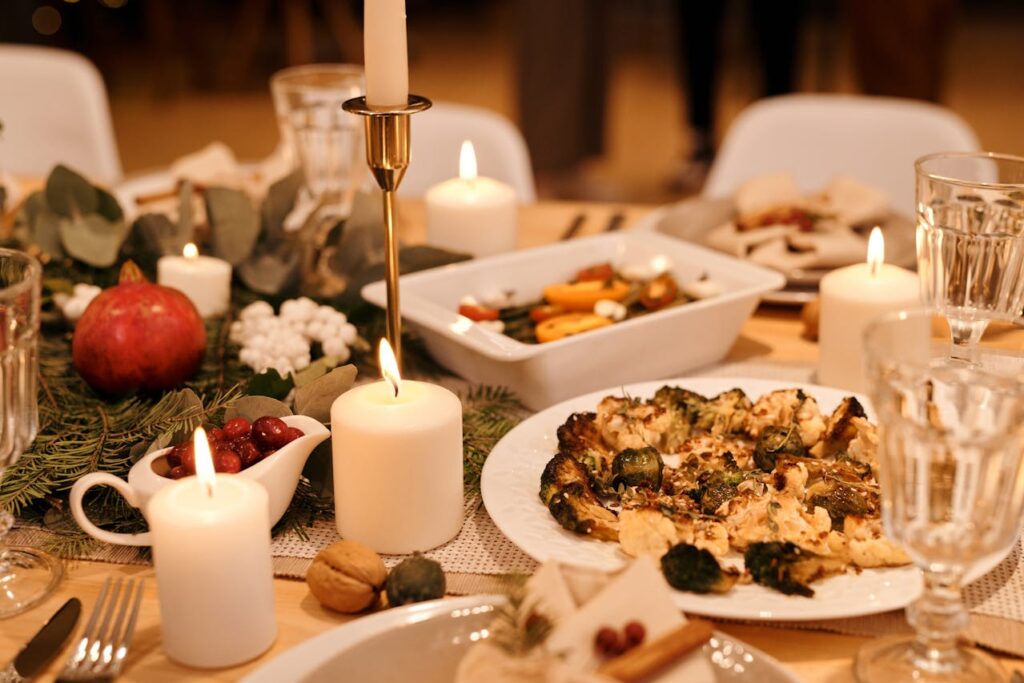
What Is a Traditional British Christmas Dinner?
A British Christmas dinner is a roast dinner on steroids—the most elaborate meal of the year, traditionally served on 25th December. It centres around roast turkey (though alternatives exist) and features multiple side dishes, vegetables, sauces, and accompaniments that have evolved over centuries.
Why the British Christmas Dinner Is Unique
Unlike other countries’ Christmas meals, the traditional Christmas dinner that UK families eat is:
- Always a roast: At its heart, it’s an elevated Sunday roast
- Turkey-dominated: 76% of British households serve turkey
- Heavily traditional: The same dishes appear year after year
- Completely overwhelming: 10+ dishes all served simultaneously
- Afternoon timing: Usually served between 1-3 pm, never in the evening
Fun fact: The average British Christmas dinner contains around 3,000 calories on the plate before dessert—roughly 1.5 days’ worth of recommended intake in one sitting.
When Do British People Eat Christmas Dinner?
Timing: Between 1 pm and 3 pm on Christmas Day (25th December)
Why afternoon, not evening?
- Tradition from Victorian times, when dinner was served midday
- Allows for morning present opening
- Leaves evening free for leftovers, TV, and recovering
- Means you can have breakfast (Buck’s Fizz) and still be hungry
What it’s called:
- “Christmas dinner” (most common, even though it’s lunchtime)
- “Christmas lunch” (technically correct)
- “Christmas tea” (in some Northern regions)
Most British people simply call it “Christmas dinner” regardless of when it’s served.
The Complete British Christmas Dinner Menu
Here’s everything that appears on a traditional British Christmas dinner table:
The Main Event
Turkey (roasted whole)
- 5-7kg turkey for 8-10 people is typical
- Cooked for 20 minutes per kg plus 20 minutes
- Must be golden, crispy-skinned, and moist
Stuffing (sage and onion traditional)
- Cooked inside the bird (old-fashioned) or separately (safer)
- Sage and onion are the most traditional
- Sausage meat and chestnut variations are popular
Pigs in Blankets
- Chipolata sausages wrapped in bacon
- The most fought-over item on the table
- 2-3 per person minimum (always make extras)
The Vegetables
Roast Potatoes (the star vegetable)
- Parboiled then roasted in goose or duck fat
- Crispy outside, fluffy inside
- More important than the turkey itself to many Brits
Brussels Sprouts
- The most divisive Christmas vegetable
- Traditionally boiled (often overcooked)
- Modern trend: pan-fried with bacon and chestnuts
Carrots and Parsnips
- Honey-roasted together
- Cut into batons
- Sweet and caramelised
Other vegetables (family-dependent):
- Red cabbage (often braised with apples)
- Cauliflower cheese
- Green beans
- Swede/turnip (mashed, especially in Scotland)
- Peas (simple but reliable)
The Sauces and Accompaniments
Gravy (essential, copious amounts)
- Made from turkey drippings
- Should be smooth, rich, and plentiful
- The glue that holds everything together
Cranberry Sauce
- Sweet and tart
- Cuts through rich meat
- Either homemade or from a jar
Bread Sauce (divisive but traditional)
- Very British, not found elsewhere
- Love it or hate it—rarely ambivalent
Yorkshire Pudding (controversial inclusion)
- Traditionally for Sunday roast with beef only
- Many families include it anyway because it is delicious
- Purists say it doesn’t belong; pragmatists disagree
The Dessert (The Pudding)
Christmas Pudding (most traditional)
- Dark, steamed suet pudding with dried fruit
- Made weeks in advance
- Served flaming with brandy
- Topped with brandy butter, custard, or cream
Alternatives:
- Christmas cake (fruitcake with marzipan and royal icing)
- Trifle (layers of sponge, fruit, jelly, custard, cream)
- Mince pies
- Yule log
- Ice cream (increasingly popular)
What’s NOT on a Traditional British Christmas Dinner
Despite what non-Brits might think, these are NOT part of a traditional British Christmas dinner:
- ❌ Ham or gammon (that’s Boxing Day)
- ❌ Prime rib (that’s American)
- ❌ Mashed potatoes (we have roasties instead)
- ❌ Sweet potatoes (American import, rarely traditional)
- ❌ Green bean casserole (American)
- ❌ Corn on the cob (American)
History: Why We Eat What We Eat
Medieval Christmas (1200s-1400s)
The feast: Multiple courses, roasted meats, ale
Common meats:
- Boar’s head (centrepiece)
- Venison
- Swan
- Peacock (for the wealthy)
- Goose (for common folk)
No turkey yet: Turkey wasn’t introduced to Britain until the 1500s from the Americas.
Tudor Christmas (1500s-1600s)
Turkey arrives: Spanish traders brought turkeys from the New World in the 1520s.
Why turkey took off:
- Bigger than a goose (fed more people)
- Didn’t provide eggs or milk (unlike chickens/cows), so economical to slaughter
- Impressive centrepiece
- Became fashionable among the nobility
Henry VIII connection: Legend says Henry VIII was the first English king to eat turkey for Christmas (though historians debate this).
Victorian Christmas (1800s)
Charles Dickens solidified tradition: A Christmas Carol (1843) features the Cratchit family eating a goose, but Scrooge sends them a massive turkey as redemption. This cemented turkey as the aspirational Christmas meat.
What Victorians ate:
- Roast turkey or goose
- Beef (very popular)
- Plum pudding (evolved into Christmas pudding)
- Mince pies (still contained meat)
- Vegetables became more prominent
Why Victorian Christmas matters: Our modern British Christmas dinner is essentially Victorian. They established:
- Turkey as a centrepiece
- Multiple side dishes
- Christmas pudding
- Crackers (invented 1847)
- Afternoon timing
- Family-focused celebration
20th Century to Present
1900s-1950s:
- Turkey became affordable for working-class families
- Goose declined in popularity
- Brussels sprouts became a Christmas staple (cultivated in the UK)
1960s-1980s:
- Frozen turkeys made preparation easier
- Bernard Matthews and other brands made turkey accessible year-round
- TV dinners influenced presentation
1990s-2000s:
- Supermarket prepared foods became acceptable
- Nigella Lawson and other celebrity chefs elevated Christmas cooking
- Organic, free-range turkeys gained popularity
2010s-2020s:
- Vegetarian and vegan options normalised
- Nut roasts are no longer just for “weird” families
Essential Elements Explained: How to Cook Each
Turkey (The Main Event)
Choosing your turkey:
- Size: 450g per person (5kg turkey feeds 10-11 people)
- Fresh vs frozen: Fresh tastes better but costs more; frozen is practical
- Free-range vs standard: Free-range has better flavour and texture
- Crown vs whole: Crown (just breast, no legs) is easier but less impressive
Cooking method:
- Prep night before:
- Remove from fridge 1 hour before cooking (room temperature cooks evenly)
- Stuff cavity with onion, lemon, and herbs
- Butter under skin
- Season well
- Cooking time:
- 20 minutes per kg plus 20 minutes at 180°C/gas mark 4
- Cover with foil for the first 2/3 of cooking
- Remove foil to brown for the final 1/3
- Testing doneness:
- Insert the skewer into the thickest part of the thigh
- Juices should run clear, not pink
- Internal temp: 70°C minimum
- Resting (crucial!):
- Remove from oven, cover in foil and tea towels
- Rest 30-60 minutes (redistributes juices)
- Frees up oven space
- Easier to carve when rested
Common mistakes:
- Not defrosting properly (can take 48 hours for a large turkey)
- Overcooking breast meat (dry turkey catastrophe)
- Not resting (juices run everywhere when carved)
- Overstuffing the cavity (increases cooking time dangerously)
Roast Potatoes (The True Star)
Why they matter: Many British people care more about roast potatoes than the turkey itself. Perfect roasties are non-negotiable.
The method:
- Prep:
- Peel and cut into equal chunks (golf ball size)
- Rinse off excess starch
- Parboil:
- Boil in salted water for 8-10 minutes
- Drain thoroughly
- Shake pan to fluff up edges (creates craggy surface = extra crispy)
- Fat choice:
- Goose fat: Traditional, expensive, incredible flavour
- Duck fat: Similar to goose, slightly cheaper
- Vegetable oil: Perfectly acceptable, practical
- Beef dripping: Old-fashioned but delicious
- Roasting:
- Heat the fat in a roasting tin until smoking hot (220°C)
- Add potatoes carefully (will spit)
- Roast for 45-60 minutes
- Turn halfway through
- Season with sea salt when done
Pro tips:
- Make double—they disappear immediately
- Larger chunks = fluffier inside
- Higher temperature = crispier outside
- Don’t crowd the tin (steam = soggy)
Brussels Sprouts (The Controversial Vegetable)
Why everyone hates them: Usually because they’re overcooked. Mushy, grey, sulphurous sprouts are grim. Properly cooked sprouts are actually delicious.
The traditional method (often done wrong):
- Trim the base and remove the outer leaves
- Cut a cross in the bottom (supposedly cooks evenly—doesn’t really)
- Boil in salted water for 5-7 minutes (NO LONGER!)
- Drain and serve
Why this fails: Overcooking releases sulphur compounds = cabbage smell from hell.
The modern method (converts haters):
- Trim and halve sprouts
- Pan-fry in butter with chopped bacon
- Add chestnuts if feeling fancy
- Season with black pepper
- Cook until just tender with slight bite
Alternative: Shred sprouts and sauté with garlic and butter. Game-changer.
Fun fact: Brussels sprouts weren’t widely eaten at Christmas until the 20th century. Now 60 million are consumed in the UK during Christmas week alone.
Pigs in Blankets
What they are: Chipolata sausages wrapped in streaky bacon.
Why they’re essential: Small, salty, perfect. Everyone wants more. Children fight over them.
Method:
- Wrap each chipolata in a rasher of bacon (streaky works best)
- Place on baking tray, seam-side down
- Roast at 200°C for 25-30 minutes
- Turn halfway for even browning
How many: Minimum 2-3 per person. Make extras—seriously.
British vs American: In America, “pigs in blankets” means sausages in pastry. In Britain, it’s bacon-wrapped sausages. The pastry version is called a “sausage roll” here.
Carrots and Parsnips (Honey-Roasted)
Method:
- Peel and cut into batons
- Toss in melted butter, honey, and seasoning
- Roast at 190°C for 35-40 minutes
- Turn occasionally for even caramelisation
Parsnip controversy: Some people think sweet vegetables are wrong at Christmas. They’re incorrect, but check with guests.
Stuffing
Traditional: Sage and Onion
Ingredients:
- Onion (finely chopped)
- Fresh sage
- Butter
- Egg to bind
Modern popular: Sausage Meat and Chestnut
Ingredients:
- Sausage meat
- Cooked chestnuts (chopped)
- Onion
- Herbs
Shop-bought vs homemade:
- Paxo: Perfectly acceptable, most families use it
- M&S/Waitrose: Step up without effort
- Homemade: Best flavour, more effort
Inside or outside turkey?
- Inside: Traditional, flavours the meat, but risky (may not cook through)
- Outside: Safer, easier to get crispy, recommended by food safety experts
Gravy (The Essential Glue)
Proper method:
- Remove turkey from roasting tin
- Pour drippings into jug, let fat settle on top
- Spoon off most fat (keep a bit)
- Make roux in roasting tin: flour + fat, cook 1 minute
- Gradually add stock (chicken or turkey), whisking constantly
- Add turkey drippings
- Add splash of wine or sherry (optional but posh)
- Simmer until thickened
- Season well, strain if needed
Realistic method:
- Use good instant gravy (Bisto Best or similar)
- Mix with turkey drippings and a splash of wine
- Nobody can tell the difference
- Life’s too short for lumpy gravy
Quantities: 150-200ml per person (British people drown everything in gravy).
Cranberry Sauce
Shop-bought: Perfectly acceptable. Ocean Spray or supermarket own-brand work fine.
Homemade (if you’re keen):
- Simmer fresh or frozen cranberries with sugar and orange zest
- Cook until berries burst
- Cool and serve
American vs British: American cranberry sauce is often jelly-smooth from a can. British versions tend to be chunkier.
Bread Sauce (Very British, Very Divisive)
What it is: Milk infused with clove-studded onion, thickened with breadcrumbs.
Team Bread Sauce: “It’s traditional! It’s delicious! It’s comforting!”
Team Anti-Bread Sauce: “It’s milk with soggy bread. It’s absolutely grim.”
The verdict: Make it if you or your guests like it. Skip it if nobody does. Not worth the hassle or arguments otherwise.
The Cooking Timeline: Getting Everything Ready Together
This is where a British Christmas dinner gets properly stressful. You’ve got 10+ dishes all needing to be piping hot at the same time, and one oven. Here’s how to manage it:
Example Timeline (Serving at 2pm, 5kg Turkey)
7:00am:
- Turkey in oven (covered with foil)
- Set timer
9:00am:
- Check turkey
- Cup of tea
10:00am:
- Peel potatoes, start parboiling
- Prep all veg (carrots, parsnips, sprouts, etc.)
- Make stuffing if homemade
- Lay table
- Panic slightly
10:30am:
- Potatoes into roasting tin with smoking hot fat
- Back in oven on different shelf from turkey
11:30am:
- Remove foil from turkey (browns for last hour)
- Prep pigs in blankets on tray, ready to go in
- Warm serving plates in low oven or warming drawer
12:00pm:
- Turkey out to rest (wrap in foil and tea towels to keep warm)
- Temperature increases to 200°C
- Pigs in blankets in oven
- Carrots/parsnips in oven
- Turn roast potatoes
12:30pm:
- Sprouts on to boil/fry
- Stuffing in oven (if not already done)
- Make gravy from turkey drippings
- Heat sauces (cranberry, bread sauce)
- Start mild panic about timing
1:30pm:
- Everything finishing up
- Check all vegetables
- Keep gravy warm
- Organise serving dishes
- Panic intensifies
1:45pm:
- Carve turkey
- Dish everything up (chaos ensues)
- Shout at anyone not helping
2:00pm:
- Serve (hopefully)
- Collapse
Reality check: It never goes exactly to plan. Dinner at 2pm often means 2:30pm or even 3pm. Factor in the chaos, accept it, have more wine.
Regional Variations Across the UK
British Christmas dinner varies slightly by region:
England
General: Standard turkey, roast potatoes, sprouts, pigs in blankets
North:
- More likely to include Yorkshire puddings
- Red cabbage common
- Sometimes beef instead of turkey (Lancashire, Yorkshire)
South:
- Parsnips more popular
- More likely to serve wine instead of beer
London:
- International influences (more adventurous)
Scotland
Additions:
- Stovies: Leftover mashed potato dish (sometimes served day after)
- Mashed neeps (swede/turnip): Traditional alongside other veg
- Clootie dumpling: Traditional Scottish pudding (alternative to Christmas pudding)
- Tablet: Scottish fudge with coffee
Meats: Venison more common than in England
Wales
Additions:
- Roast goose: More popular than elsewhere in UK
- Welsh cakes: May appear with dessert
- Laverbread: Seaweed dish (rare but traditional)
Northern Ireland
Additions:
- Ham: Often served alongside turkey (Christmas Day, not just Boxing Day)
- Soda bread: Accompaniment
- Fifteens: Traybake dessert
Irish whiskey: Common in Christmas pudding and brandy butter
Alternative Mains to Turkey
Not everyone wants turkey. Here are traditional British alternatives:
Goose
History: The traditional Christmas bird before turkey became affordable.
Pros:
- Rich, dark meat
- Traditional and impressive
- Lots of fat (brilliant for roast potatoes)
Cons:
- Expensive (£70-150)
- Less meat per kg (more bone)
- Very fatty (can be overwhelming)
- Harder to find
Who chooses this: Traditionalists, foodies, people who grew up eating goose
Beef (Rib of Beef)
Pros:
- Easier to cook than turkey
- Universally loved
- Impressive centrepiece
- Leftovers are brilliant
Cons:
- Not particularly “Christmassy”
- Expensive for quality cut
- Need to know how your guests like it cooked
Who chooses this: People who prioritise taste over tradition
Ham or Gammon (Honey-Glazed)
Pros:
- Forgiving to cook
- Feeds a crowd
- Brilliant cold on Boxing Day
- Less stressful than turkey
Cons:
- Needs soaking if bought uncooked
- Takes hours
- Not as impressive as turkey
Who chooses this: Practical people, those hosting large groups
Nut Roast
History: Became a vegetarian Christmas staple in the 1980s-90s.
Modern versions:
- Cranberry and nut
- Mushroom and chestnut
- Beetroot and walnut
Pros:
- Vegetarian-friendly
- Holds together well
- Can be very delicious
Cons:
- Gets a bad reputation (often deserved)
- Can be dry if not done well
- Not exciting for meat-eaters
Game (Venison, Pheasant, Duck)
Pros:
- Special occasion worthy
- Traditional British meats
- Delicious if cooked properly
Cons:
- Expensive
- Can be tough if overcooked
- Less familiar to guests
- Smaller portions
Who chooses this: Foodies, people in rural areas, those wanting something different
The Turkey Crown (Compromise)
What it is: Just the breast meat, no legs or wings.
Pros:
- Easier to cook than whole turkey
- All white meat (some prefer this)
- Less waste
- Fits in smaller ovens
Cons:
- Less impressive
- No carcass for soup
- More expensive per kg
Vegetarian and Vegan British Christmas Dinner
Vegetarian Options
Mains:
- Nut roast (traditional)
- Stuffed butternut squash
- Mushroom Wellington
- Vegetable tart
- Cauliflower cheese (as main instead of side)
Sides: Most are naturally vegetarian:
- Roast potatoes (if cooked in vegetable oil)
- All vegetables
- Stuffing (check for meat)
- Yorkshire puddings (contain eggs but no meat)
Watch out for:
- Pigs in blankets (obviously not vegetarian)
- Gravy (often made with meat drippings)
- Stuffing (may contain sausage meat)
- Roast potatoes (often cooked in goose/duck fat)
Vegan Options
Mains:
- Vegan nut roast
- Stuffed squash
- Mushroom Wellington (with vegan pastry)
- Vegetable tart
Sides:
- Roast potatoes in oil
- All vegetables (check butter)
- Vegan Yorkshire puddings (plant milk, aquafaba)
Watch out for:
- Butter on vegetables
- Milk in bread sauce
- Egg in Yorkshire puddings
- Cream/butter in mashed vegetables
Dessert:
- Vegan Christmas pudding (increasingly available)
- Fruit-based desserts
- Vegan ice cream
2024 reality: Most supermarkets now offer excellent vegan Christmas options. M&S, Waitrose, and Tesco all have dedicated vegan Christmas ranges.
Traditional British Christmas Dinner Etiquette
Table Manners
Serving:
- Wait for everyone to be served before starting
- Host usually carves and serves, or dishes up in kitchen
- Pass serving dishes to the right (clockwise)
Eating:
- Use knife and fork properly (fork in left hand, knife in right)
- Don’t put elbows on table while eating
- Eat at a reasonable pace (not too fast, not too slow)
Christmas crackers:
- Pull crackers before eating (between courses)
- Everyone must wear paper hat (non-negotiable)
- Read jokes aloud (groan at how bad they are)
- Keep cheap plastic toy for approximately 4 minutes
Compliments and Complaints
Do:
- Compliment the cook
- Have seconds if offered
- Offer to help clear plates
Don’t:
- Complain about anything (even if turkey’s dry)
- Compare to how “Mum makes it”
- Refuse to wear cracker hat
- Start before everyone’s served
The Awkward Situations
Someone’s vegetarian and you forgot:
- Apologise profusely
- Offer all the sides plus extra Yorkshire puddings
- Make emergency nut roast/veggie option
- Promise to remember next year (probably won’t)
Someone doesn’t like Brussels sprouts:
- Let them skip them (don’t force it)
- Don’t make a thing about it
Someone wants seconds of everything:
- Allow it—it’s Christmas
- Compliment taken
Someone’s on a diet at Christmas:
- Ignore this information
- Serve normal portions
- Don’t comment
Serving Styles
Traditional Table Service (Most Common)
How it works:
- Everything brought to table in serving dishes
- Turkey carved at table or in kitchen
- People help themselves
- Dishes passed around
Pros:
- Looks impressive
- People control own portions
- Very traditional
- Feels communal
Cons:
- Food cools quickly
- Dishes everywhere
- Awkward passing
- Messy table
Pre-Plated in Kitchen (Increasingly Popular)
How it works:
- Everything dished up on individual plates in kitchen
- Plates brought to table
- Seconds offered from serving dishes
Pros:
- Food stays hot (plates warmed)
- Portion control
- Less chaos at table
- Easier for hosts
- Looks restaurant-quality
Cons:
- People can’t choose own portions
- Less traditional
- Seconds require more effort
- Less impressive presentation
Buffet Style (Casual)
How it works:
- Everything laid out on sideboard or separate table
- People serve themselves
- Usually more relaxed atmosphere
Pros:
- Very casual
- People choose exactly what they want
- Easy for hosts
- Good for large groups
Cons:
- Not traditional
- Food cools down
- Lacks ceremony
- Queuing
Most common: Hybrid approach—turkey and mains pre-plated, vegetables in serving dishes for seconds.
Common British Christmas Dinner Disasters (And Fixes)
Everything’s Gone Cold
Why: Dished up too early, table faff, someone’s late
Prevention:
- Warm plates thoroughly in low oven
- Have everything ready simultaneously
- Don’t faff about during plating
Emergency fix:
- Microwave is your friend (no shame)
- Extra hot gravy helps
- Blame uncle who arrived late
Ran Out of Oven Space
Why: Everything needs the oven at once, poor planning
Prevention:
- Plan what goes where and when
- Use every oven shelf
- Multi-task ruthlessly
Emergency fix:
- Use hob for sprouts, green beans
- Microwave some veg (nobody’s judging)
- Keep turkey warm outside oven
- Pigs in blankets under grill
Turkey’s Dry (The Classic Disaster)
Why: Overcooked, didn’t rest, no basting
Prevention:
- Use meat thermometer
- Don’t overcook
- Butter under skin before cooking
- Cover with foil most of cooking time
- Rest properly
Damage limitation:
- Drown in gravy
- Serve dark meat (moister)
- Admit it’s dry, blame recipe
- Make sandwiches later (masks dryness)
Burnt Something
Why: Oven too hot, distracted, wine
Emergency fix:
- Scrape off burnt bits
- Serve good parts only
- Extra gravy coverage
- Joke about it
- Nobody will mention it (out loud)
Someone’s Vegetarian and You Forgot
Why: You forgot, they didn’t remind you, chaos
Emergency fix:
- Apologise profusely
- Offer all the vegetarian sides
- Extra Yorkshire puddings and stuffing
- Emergency nut roast from freezer (microwave 10 mins)
- Make it up with brilliant pudding
Gravy’s Lumpy
Why: Added liquid too fast, didn’t whisk enough
Emergency fix:
- Strain through sieve into clean pan
- Whisk like hell
- Blend with stick blender
- Serve in gravy boat (hides lumps)
Not Enough Roast Potatoes (Most Common)
Why: Always underestimate, everyone wants more
Prevention:
- Make double what you think you need
- Seriously, double it
Emergency fix:
- Oven chips (better than nothing)
- Mashed potatoes (not the same)
- Promise more for Boxing Day
Running Behind Schedule
Why: Always happens, it’s tradition
Management:
- Text guests “dinner delayed 30 mins”
- More drinks for guests
- Relax—nobody cares
- Embrace chaos
Leftover Strategy
A traditional British Christmas dinner produces legendary amounts of leftovers. Plan for this:
What to Save
Turkey:
- White meat (sandwiches, curry, pie)
- Dark meat (stews, soup)
- Carcass (soup stock—absolute must)
Vegetables:
- Roast potatoes (bubble and squeak)
- Brussels sprouts (bubble and squeak, fried)
- Carrots/parsnips (soup, mash)
Other:
- Stuffing (sandwiches, breakfast)
- Gravy (freeze in portions)
- Pigs in blankets (breakfast, sandwiches)
Boxing Day Essentials
The traditional British Boxing Day menu:
- Turkey sandwiches: White bread, butter, turkey, stuffing, cranberry sauce
- Bubble and squeak: Leftover veg fried together, often with a fried egg
- Turkey curry: Using dark meat
- Cold cuts: Ham, turkey, various pickles
- Turkey soup: From the carcass
Storage Times
- Fridge: Cooked turkey 3-4 days
- Freezer: Cooked turkey 3 months
- Gravy: Freeze in portions, use within 3 months
See our complete guide: 20+ Turkey Leftover Recipes
How Much Food Per Person? (British Christmas Dinner Portions)
Turkey: 450-500g per person (includes bones)
Roast potatoes: 4-5 per person (always make extras)
Brussels sprouts: 5-6 per person
Carrots: 3-4 per person
Parsnips: 2-3 per person
Pigs in blankets: 3 per person minimum (make 5 each)
Stuffing: 75-100g per person
Gravy: 150-200ml per person
Yorkshire puddings (if serving): 1-2 per person
Cranberry sauce: 1 jar per 6-8 people
Bread sauce: 50ml per person (if serving)
Reality: You’ll make too much. Everyone does. That’s tradition. Embrace the leftovers.
Shopping List for 8 People
- 5-6kg turkey
- 2kg potatoes
- 500g sprouts
- 500g carrots
- 500g parsnips
- 24 pigs in blankets minimum
- 400g stuffing (or packet mix)
- 2 jars gravy granules
- 1 jar cranberry sauce
- Bread sauce ingredients (if making)
- Christmas pudding
- Brandy butter
Plus: Butter, oil/fat for roasting, herbs, wine for gravy, crackers, etc.
The Bottom Line on Traditional British Christmas Dinner
A traditional British Christmas dinner is simultaneously:
- The most stressful meal of the year
- The most anticipated meal of the year
- Too much food
- Not enough roast potatoes
- Running 30 minutes late
- Absolutely worth it
The truth: The turkey might be slightly dry. The sprouts will be debated. Someone will complain about the Yorkshire pudding inclusion/exclusion. Dinner will probably be 30 minutes late. And that’s absolutely fine. That’s Christmas.
Focus on getting the main elements right (turkey, roast potatoes, gravy), don’t stress about perfection, and remember: everyone’s there for the company as much as the food.
The British Christmas dinner is chaotic, overwhelming, and exhausting to prepare. It’s also one of those meals that brings families together once a year, creates memories, and defines what Christmas actually feels like.
Your nan made it. Your mum makes it. One day you’ll be making it. And the tradition continues.
Quick Reference: British Christmas Dinner at a Glance
Essential Shopping List (8 people)
- 5-6kg turkey
- 2kg potatoes
- 500g Brussels sprouts
- 500g carrots
- 500g parsnips
- 24+ pigs in blankets
- 400g stuffing
- Gravy (granules or stock)
- Cranberry sauce
- Bread sauce ingredients (optional)
- Christmas pudding
- Brandy butter/cream
Critical Cooking Times (For 2pm Serving)
- 7am: Turkey in oven
- 10am: Prep vegetables
- 10:30am: Roast potatoes in
- 12pm: Turkey out to rest, temperature up to 200°C
- 12:30pm: Everything else finishing
- 1:45pm: Carve and plate
- 2pm: Serve (hopefully!)
Non-Negotiables (According to Most Brits)
✓ Roast potatoes (crispy) ✓ Turkey (or acceptable alternative) ✓ Pigs in blankets ✓ Gravy (loads of it) ✓ At least one green vegetable ✓ Cranberry sauce ✓ Christmas pudding or alternative
Common Mistakes to Avoid
✗ Not defrosting turkey properly (48 hours needed) ✗ Making too few roast potatoes (double your estimate) ✗ Overcooking Brussels sprouts (5-7 minutes max) ✗ Not resting the turkey (30-60 minutes essential) ✗ Forgetting someone’s vegetarian ✗ Starting too late ✗ Not warming plates
Emergency Fixes
- Everything’s cold: Microwave it (no shame)
- Turkey’s dry: Drown in gravy
- Gravy’s lumpy: Strain through sieve
- Burnt something: Scrape off, extra gravy
- Ran out of roast potatoes: Make more immediately, everyone will wait
Regional Must-Knows
England: Standard format, Yorkshire puddings debated
Scotland: Add mashed neeps (swede), possibly clootie dumpling for dessert
Wales: Roast goose more popular, Welsh cakes may appear
Northern Ireland: Ham often served alongside turkey (not just Boxing Day)
The Reality Check
A British Christmas dinner is:
- More work than you remember
- Never on time
- Worth every minute of stress
- Creating memories for years
- The most important meal you’ll cook all year
Perfection isn’t the goal. Being together is.
FAQs About British Christmas Dinner
What time is Christmas dinner served in the UK?
Between 1pm and 3pm, most commonly around 2pm. It’s called “dinner” even though it’s lunchtime, because that’s tradition. Some Northern families call it “Christmas tea.”
What’s the difference between a British and an American Christmas dinner?
British: Turkey, roast potatoes, Brussels sprouts, pigs in blankets, multiple vegetables, gravy, served afternoon
American: Turkey, mashed potatoes, sweet potato casserole, green bean casserole, cranberry jelly, served evening
Is ham part of British Christmas dinner?
Not traditionally on Christmas Day—that’s Boxing Day. However, Northern Irish families often serve ham alongside turkey on Christmas Day itself.
Do British people really eat Brussels sprouts at Christmas?
Yes! 60 million Brussels sprouts are consumed in the UK during Christmas week. They’re traditional, though controversial. Many people hate them (usually because they’re overcooked).
What do vegetarians eat for British Christmas dinner?
Traditionally: nut roast with all the trimmings. Modern options include stuffed butternut squash, mushroom Wellington, or vegetable tart. Most sides are vegetarian-friendly.
Why do British people eat turkey at Christmas?
Turkey became popular in the Victorian era because it was bigger than goose (fed more people), didn’t provide eggs or milk (so economical to slaughter), and was impressive. Charles Dickens’ A Christmas Carol helped cement the tradition.
What is bread sauce and why do British people eat it?
Bread sauce is a milk-based sauce thickened with breadcrumbs, flavoured with clove-studded onion. It’s very British and very divisive—people either love it or think it’s grim. No other country eats it.
Are Yorkshire puddings traditional at Christmas?
Controversial! They’re traditionally for a Sunday roast with beef. Many British families include them at Christmas anyway because they’re delicious. Purists say no; pragmatists say yes.
What do you eat for dessert after a British Christmas dinner?
Traditional: Christmas pudding (dark, steamed fruit pudding) served flaming with brandy, topped with brandy butter or custard
Alternatives: Christmas cake, trifle, mince pies, Yule log, or increasingly, ice cream
How many courses is a British Christmas dinner?
Technically two courses (main and dessert), but the main course features 10+ items on one plate. Some families have a starter (prawn cocktail is retro-popular) and cheese afterwards.
What drinks go with a British Christmas dinner?
- Wine: Red (with turkey or beef) or white (with turkey)
- Beer: Ale or lager
- Sherry: Before dinner
- Port: After dinner with cheese
- Champagne/Prosecco: Throughout
- Soft drinks: For drivers and children
Why is the British Christmas dinner so stressful to cook?
Everything needs to be hot simultaneously; you’re cooking 10+ dishes with one oven, timing is critical, you’re probably hosting, and everyone has opinions. It’s basically project management with food.
What do you do with Christmas dinner leftovers?
Boxing Day traditions:
- Turkey sandwiches (white bread, butter, turkey, stuffing, cranberry)
- Bubble and squeak (leftover veg fried together)
- Turkey curry
- Turkey soup (from the carcass)
- Cold cuts with pickles
How much does a British Christmas dinner cost?
Budget: £30-40 for 8 people (supermarket basics)
Mid-range: £60-80 for 8 people (decent quality)
Premium: £100-150+ for 8 people (free-range turkey, premium ingredients)
Drinks not included
Can you prepare a British Christmas dinner in advance?
Can prep ahead:
- Peel potatoes (leave in water, fridge, the night before)
- Prep vegetables (night before)
- Make stuffing (night before)
- Make bread sauce (reheat on day)
Must cook day of:
- Turkey
- Roast potatoes
- Most vegetables
- Gravy (from fresh turkey drippings)
What if I’ve never cooked Christmas dinner before?
Tips:
- Start with a timeline, working backwards from serving time
- Don’t try anything fancy—stick to traditional
- Use shop-bought shortcuts (gravy, stuffing, sauces)
- Enlist help—delegate tasks
- Accept it won’t be perfect
- Have wine
- Remember: everyone’s impressed you’re doing it at all
The Bottom Line on British Christmas Dinner
British Christmas dinner is simultaneously the best and worst meal of the year. It’s too much food, too much stress, too much pressure—and absolutely essential to Christmas.
The turkey might be slightly dry. The Brussels sprouts might be grey. Dinner might be 45 minutes late. Someone will complain there aren’t enough pigs in blankets (there never are). The roast potatoes will disappear first. And everyone will be too full for pudding but eat it anyway.
And it’s perfect.
Because British Christmas dinner isn’t really about the food (though the food matters). It’s about:
- Families gather once a year
- Following the same recipes your grandmother used
- Creating new memories while honouring old ones
- The chaos of getting everything ready together
- Collapsing afterwards with a whisky and the Queen’s speech
- Knowing you’re eating the exact same meal as millions of other British households
The turkey brings everyone to the table. The roast potatoes make it worth it. The gravy holds it all together. And the memories last a lifetime.
Now go forth and roast. You’ve got this.
Related Guides:
- Back to Complete Christmas Food Guide
- How to Cook the Perfect Christmas Turkey
- Vegetarian & Vegan Christmas Dinner Ideas
What’s your non-negotiable Christmas dinner element? The thing you absolutely can’t do without? Tell us in the comments!