Every Christmas Day at 3pm, Britain collectively stops what it’s doing and turns on the telly. Not for football, not for a James Bond film, but for the monarch to talk to us for about 10 minutes.
And you know what? We actually listen. Even the teenagers put their phones down. Even families mid-argument pause the bickering. For those 10 minutes, the King (or Queen, as it was for 70 years) has the nation’s attention.
But how did this become such an integral part of British Christmas? And why hasn’t the age of Netflix and short attention spans killed it off?
Let me tell you the story of how a stammering king’s radio broadcast became one of Christmas Day’s most sacred traditions.
- The First Christmas Broadcast: 1932
- King George VI: The Reluctant Broadcaster
- Queen Elizabeth II: 70 Years of Christmas Broadcasts
- King Charles III: The New Era
- What’s Actually In a Christmas Broadcast?
- Why Do We Still Watch?
- The Viewing Experience
- Controversies and Debates
- Alternative Christmas Messages
- The Commonwealth Element
- Behind the Scenes
- Memorable Quotes From Royal Broadcasts
- The Future of the Christmas Broadcast
- The Bottom Line
The First Christmas Broadcast: 1932
The Royal Christmas Message tradition began on Christmas Day 1932, when King George V spoke to the nation and Commonwealth via BBC radio.
Why It Started
The BBC had been experimenting with using radio to connect the Empire. In 1932, John Reith (BBC’s founding director-general) convinced the King to give it a go.
The pitch: Your Majesty, you can speak to all your subjects across the entire Empire simultaneously. From Buckingham Palace to India, Canada to Australia—everyone listening at once.
George V was sceptical but agreed to try.
That First Broadcast
At 3pm on Christmas Day 1932, King George V spoke into a microphone at Sandringham. His words were broadcast across the British Empire.
The opening line: “I speak now from my home and from my heart to you all; to men and women so cut off by the snows, the desert, or the sea, that only voices out of the air can reach them.”
Properly moving stuff. Remember, this was revolutionary—the first time a monarch had spoken directly to ordinary people in their homes.
The reaction: People were amazed. Families gathered around wireless sets. Some cried. It was a moment of connection across vast distances that had never been possible before.
Who wrote it? Rudyard Kipling—yes, “The Jungle Book” Kipling—helped write that first broadcast. No pressure there, then.

Why 3pm?
The timing was carefully chosen to work across different time zones:
- 3pm in Britain
- Reasonable time in Canada
- Morning in Australia and New Zealand
- Picked up elsewhere in the Empire
It stuck, and we’ve kept the 3pm slot ever since (except for rare occasions).
King George VI: The Reluctant Broadcaster
George VI (father of Queen Elizabeth II) had a severe stammer. Public speaking was torture for him. Yet he continued the Christmas broadcast tradition his father had started.
The 1939 Broadcast
The Christmas 1939 broadcast happened four months after WWII began. The nation was terrified. George VI gave one of the most memorable Christmas speeches ever.
The famous line: “I said to the man who stood at the Gate of the Year, ‘Give me a light that I may tread safely into the unknown.’ And he replied, ‘Go out into the darkness, and put your hand into the Hand of God. That shall be to you better than light, and safer than a known way.'”
People needed hope and comfort. Despite his stammer, despite his nervousness, the King delivered. The nation felt less alone.
“The King’s Speech” Film
The 2010 Oscar-winning film wasn’t specifically about the Christmas broadcasts, but it showed George VI’s struggle with public speaking. It reminded modern audiences why these broadcasts mattered—they weren’t easy for him, which made them more meaningful.
Queen Elizabeth II: 70 Years of Christmas Broadcasts
When Queen Elizabeth II gave her first Christmas broadcast in 1952 (from Sandringham, like her grandfather), nobody knew she’d continue for 70 years, making it one of the longest-running traditions in broadcasting history.
The Evolution Under Elizabeth II
1952-1956: Radio only
- Traditional format
- Formal tone
- Pre-recorded
- Just audio
1957: First televised broadcast
- Massive deal—seeing the Queen in your living room
- Pre-recorded at Sandringham
- Formal setting, the Queen at a desk
- Black and white, obviously
1960: First live broadcast
- The Queen spoke live from Buckingham Palace
- Nerve-wracking for everyone involved
- Showed confidence in the medium
1969: “Royal Family” documentary controversy
- The Queen took a break from broadcasting
- Written message instead
- Too much royal exposure that year
- Only year she didn’t broadcast (except 2023, her first Christmas after passing)
1993: First broadcast from Buckingham Palace instead of a country estate
- Breaking with tradition
- Responding to a difficult year (“annus horribilis”)
2012: First 3D broadcast
- Novelty factor
- Most people didn’t have 3D TVs
- Nice idea, limited impact
2020: Pandemic broadcast
- The Queen alone at Windsor
- Addressed COVID-19 isolation
- “We will meet again” reference (WWII song)
- Incredibly moving
Memorable Elizabeth II Moments
1992: “Annus Horribilis” After a year of royal scandals and Windsor Castle fire, the Queen acknowledged it had been a difficult year. Unusually personal and vulnerable.
1997: Diana’s Death The Christmas after Princess Diana died. The Queen spoke about loss and family. The nation was watching closely after criticism of the royal response to Diana’s death.
2002: Deaths of Princess Margaret and the Queen Mother Personal losses addressed publicly. The Queen spoke about grief whilst maintaining duty—very her.
2012: Diamond Jubilee Year Reflecting on 60 years as monarch. Themes of service and dedication. Properly moving.
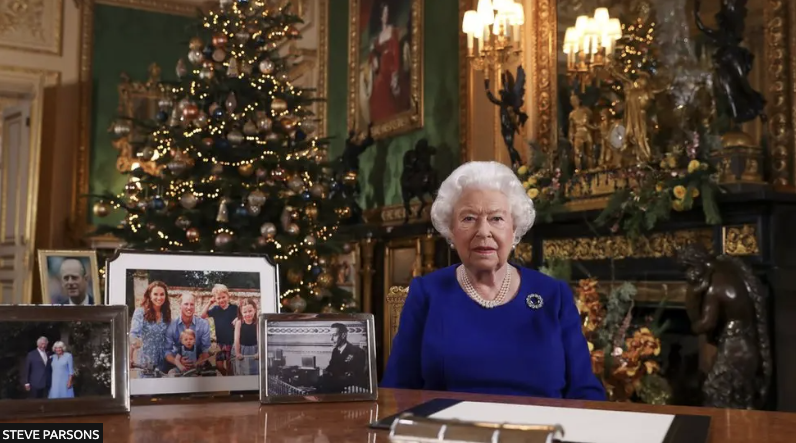
2019: Wearing the same blue dress as 1957 broadcast Deliberate choice for her “decade” speech looking back. Social media noticed immediately. Lovely touch.
2021: First Christmas without Prince Philip The Queen alone at her desk, with a photo of Philip visible. Simple, dignified, heartbreaking. The nation wept.
Her Style
Elizabeth II’s broadcasts had a consistent approach:
- Reflection on the year’s events
- Personal anecdotes (usually involving grandchildren/great-grandchildren)
- Religious references (head of Church of England)
- Themes of service, duty, and community
- Ending with hope and good wishes
Tone evolution:
- 1950s-60s: Very formal, distant
- 1970s-80s: Slightly warmer, more personal
- 1990s-2000s: More relaxed, acknowledging challenges
- 2010s-2020s: Grandmother-like, personal stories, modern issues
King Charles III: The New Era
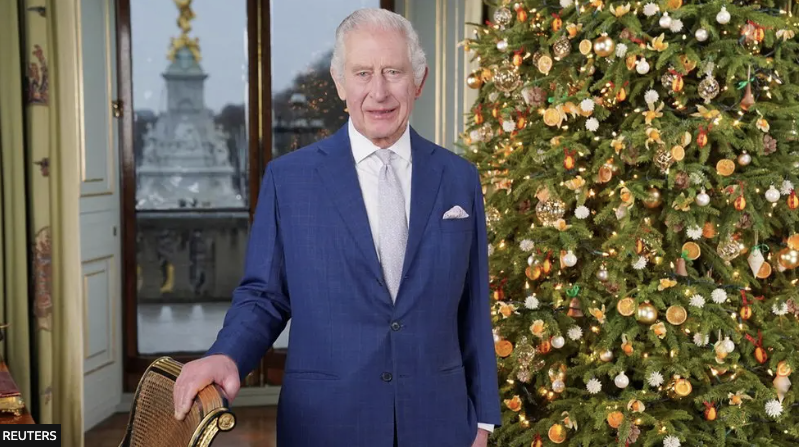
Charles gave his first Christmas broadcast as King in 2023, months after his mother’s death and his coronation.
Breaking With Tradition Immediately
Location changes:
- Spoke from a chapel, not a formal room
- Less traditional setting
- Standing, not seated at desk
- More casual, less formal staging
Tone differences:
- More environmentally focused (classic Charles)
- Acknowledged cost of living crisis
- Referenced other faiths and communities
- Less formal language
- Addressed volunteering and community service
Charles’s Approach
Early signs suggest Charles’s broadcasts will:
- Be more issue-focused (environment, poverty, community)
- Include more diverse communities
- Be less about “the firm” and more about the nation
- Maintain tradition but with modern touches
- Shorter? (His first was about 8 minutes)
The challenge: Following 70 years of Elizabeth II. Massive shoes to fill. But Charles has been waiting his whole life for this role, and it shows in the preparation.
What’s Actually In a Christmas Broadcast?
Standard Structure
Opening:
- Greeting to nation and Commonwealth
- Acknowledgment of where they’re speaking from
- Often a seasonal observation
Year in review:
- Major national/international events
- Commonwealth news
- Sometimes personal royal events (births, marriages)
Personal touch:
- Anecdotes about family
- Visits the monarch made
- People they met
- What inspired them
Thematic message:
- Usually one central theme
- Service, duty, community, hope—the usual suspects
- Religious element (but increasingly inclusive)
Ending:
- Good wishes for Christmas
- Hope for the coming year
- Thank you to viewers
- “God bless you all”
Length:
- Usually 8-10 minutes
- Used to be longer
- Modern attention spans mean shorter is better
The Production
Where it’s filmed:
- Usually a royal residence (Windsor, Sandringham, Buckingham Palace)
- Increasingly varied locations
- Carefully chosen setting and background
- Every visible item is deliberate (family photos, decorations, etc.)
When it’s recorded:
- Several days before Christmas (usually mid-December)
- Allows editing and production
- Multiple takes until perfect
- Timed exactly for TV schedule
Who writes it?
- The monarch works with speechwriters
- Final content approved by the monarch
- Personal touches added
- Reflects monarch’s views and priorities
Visual details matter:
- What they’re wearing (color, jewellery, significance)
- Photos in the background (who’s included/excluded)
- Setting (desk? chapel? garden?)
- Every detail analyzed by media and public
Why Do We Still Watch?
In 2025, when we can watch anything, anytime, on any device, why does a 10-minute speech from an unelected head of state command millions of viewers?
Tradition
For many families, it’s just what you do. You’ve always watched it. Your parents watched it. Their parents watched it. Stopping would feel wrong.
The ritual:
- Queen’s Speech at 3pm (even though it’s the King now, some still call it this)
- Everyone stops eating
- Telly goes on
- Someone shushes anyone talking
- Ten minutes of attention
- Back to chaos
Connection
For that moment, the entire nation is doing the same thing. In an increasingly fragmented media landscape, it’s one of the few shared experiences left.
Generational Link
Watching with elderly relatives who remember George VI or early Elizabeth II creates a connection to history. Grandparents telling stories of past broadcasts, how things have changed, what they remember.
Curiosity
What will they say about this year?
- Will they mention [controversial event]?
- How will they address [difficult situation]?
- What will they wear?
- Which family photos will be visible?
The speech is analyzed more than any other 10 minutes of television.
Nostalgia
For many, it’s less about the content and more about the feeling. It’s Christmas. It’s familiar. It’s comforting. Even if you’re not particularly royalist, it’s part of the day’s rhythm.
Respect
Many people watch out of respect. The monarch works hard, represents the nation, and deserves 10 minutes of attention once a year. Fair enough, really.
The Viewing Experience
Who Watches?
Viewing figures:
- Peak: 28 million (1980s)
- Recent years: 7-9 million live
- Millions more catch up later
- Declining but still substantial
Demographics:
- Older viewers more likely to watch
- Families with tradition
- Commonwealth countries
- Armed forces stationed abroad
- Expats maintaining connection
Who doesn’t watch:
- Younger people (unless family tradition)
- Ardent republicans
- People working Christmas Day
- Anyone who just can’t be bothered
The Drinking Game
Some families have made it more fun:
- Drink when they say “Commonwealth”
- Drink when they mention service
- Drink when there’s a reference to religion
- Drink when they adjust their jewellery
- Finish your drink at “God bless you all”
Warning: You will be quite drunk by the end.
Social Media Commentary
Twitter/X explodes during the broadcast:
- Live reactions
- Analyzing every visual detail
- Jokes and memes
- Which royal is/isn’t pictured
- Fashion commentary
- Political takes
It’s become a communal second-screen experience.
Controversies and Debates
Political Neutrality
The monarch is supposed to be politically neutral. But some speeches have stirred controversy:
2019: Brexit implications? People analyzed the speech for hidden Brexit messages. “Bumpy” paths mentioned—was this about Brexit? Royal family denied any political intent.
Environmental messages: Charles has always been outspoken on climate. Will his speeches be more political? Too early to tell, but watch this space.
Who’s In the Photos?
Royal watchers analyze which family photos are visible:
- Harry and Meghan included or excluded?
- Which grandchildren featured?
- Any subtle messages in photo choices?
- Cambridges vs. Sussexes presence
It’s reading tea leaves, but people love it.
Relevance Questions
Do we need it in modern Britain?
- Should an unelected monarch address the nation?
- Is it outdated in multicultural, multi-faith Britain?
- Does it serve any real purpose?
Counter-arguments:
- It’s tradition and cultural heritage
- Brings the nation together briefly
- Harm-free, optional viewing
- Many find it comforting
The Republican View
British republicans argue:
- Outdated institution getting free airtime
- Should be challenged, not celebrated
- Represents privilege and inequality
- Christmas should be secular or religious, not monarchist
Their approach to the broadcast:
- Don’t watch it
- Campaign against it
- Point out the cost
- Highlight alternative voices
Fair enough—they’re entitled to their view.
Alternative Christmas Messages
Some broadcasters offer alternatives:
Channel 4 Alternative Christmas Message:
- Started in 1993
- Features controversial or alternative voices
- Previous speakers: Ali G, Edward Snowden, Doreen and Neville Lawrence, Katie Price
- Sometimes thoughtful, sometimes publicity stunt
- Watched by far fewer people
Other messages:
- Scottish independence advocates doing their own
- Various religious leaders
- Community messages
None have the reach or impact of the official broadcast, but they provide choice.
The Commonwealth Element
The broadcast isn’t just for Britain—it’s for the entire Commonwealth.
Who else watches:
- Canada
- Australia
- New Zealand
- Caribbean nations
- African Commonwealth countries
- Various Pacific islands
Reception varies:
- Some Commonwealth nations love it
- Others increasingly ambivalent
- Republican movements in Australia, Jamaica, etc.
- Debates about relevance to non-British nations
The Commonwealth is evolving. The Christmas broadcast’s role in it is too.
Behind the Scenes
The Production Team
How it’s made:
- Filmed weeks in advance
- Multiple camera angles
- Careful lighting and staging
- Professional crew
- Post-production editing
- Timed to the second
Pressure:
- Cannot go wrong
- National broadcast
- Historical record
- Represents the monarchy
- Scrutinized intensely
Fun fact: The recordings are kept in BBC archives. Future historians will use them to understand our era. No pressure on the camera operators.
Security
What you don’t see:
- Security sweeps of location
- Controlled access during filming
- Backup recordings (in case something goes wrong)
- Secure delivery of final version to broadcasters
Distribution
How it reaches you:
- BBC broadcasts it
- ITV and other channels also show it
- Radio broadcast (BBC Radio 4)
- YouTube shortly after
- Commonwealth broadcasters
- Armed Forces networks
Basically, if you want to watch it, you can.
Memorable Quotes From Royal Broadcasts
George V (1934): “I wish you all, my dear friends, a happy Christmas, and may God bless you always.”
George VI (1939): “Put your hand into the Hand of God.”
Elizabeth II (1954): “My father made broadcasting at Christmas a family tradition.”
Elizabeth II (1997): “Grief is the price we pay for love.”
Elizabeth II (2020): “We will meet again.” (WWII echo during pandemic)
Charles III (2023): “To offer friendship, especially to those who face hardship, is one of the ways we can build a world that is happier, healthier, and more secure.”
Simple messages, but they resonate.
The Future of the Christmas Broadcast
Will It Continue?
Yes, probably. Because:
- Too embedded in tradition
- Still draws millions of viewers
- Serves a unifying purpose
- Part of royal duty
- Commonwealth connection
But it might evolve:
- Shorter broadcasts
- More informal settings
- Modern production styles
- Multi-platform distribution
- Greater diversity in messaging
When William Becomes King
Decades away, but speculation exists:
- More casual approach?
- Focus on younger generation’s concerns?
- Environmental and mental health themes?
- Modern family emphasis?
Too early to tell. He’s watching his father’s approach first.
The Bottom Line
The Royal Christmas Broadcast is one of those strange British institutions that shouldn’t work but somehow does. In theory, nobody should care about a 10-minute speech from someone who inherited their job. In practice, millions watch it every year.
It’s tradition, continuity, and connection. For 10 minutes on Christmas afternoon, the nation pauses. We listen to someone who’s spent their entire life in service (whether you agree with that service or not) reflect on the year and offer hope for the next one.
Is it perfect? No. Is it necessary? Debatable. Is it going anywhere? Unlikely.
For better or worse, the King’s Christmas broadcast is woven into the fabric of British Christmas. We might take the piss, we might not agree with everything said, and we might spend more time analyzing the photos in the background than listening to the words. But we watch.
Even if it’s just to shout at anyone who talks over it.
That’s tradition, innit?
Related: Back to UK Christmas Traditions Guide
Do you watch the King’s Speech? Is it essential Christmas viewing or something you skip? Share your thoughts in the comments—we promise not to inform the Palace if you don’t watch!