There’s something brilliant about waking up on Christmas morning to a lumpy sock full of presents, isn’t there? It’s the first thing kids check, often before it’s even properly light outside. But why stockings? Why not Christmas pillowcases or festive buckets? And who decided that Father Christmas should shimmy down chimneys specifically to fill our socks?
Let me tell you the story—it involves a generous saint, three desperate sisters, and a legend that somehow convinced millions of parents to stuff tangerines into socks every December.
- The Legend of St Nicholas and the Three Sisters
- From Gold Coins to Tangerines: How Stockings Evolved
- British Christmas Stocking Traditions
- The Stocking vs Pillowcase Debate
- DIY Christmas Stockings vs Bought Ones
- Stocking Filler Economics: The British Parent’s Dilemma
- Stocking Traditions Across the UK
- The Rules of Christmas Stockings (Unspoken But Universally Known)
- Adult Christmas Stockings
- When Did Christmas Stockings Become This Big?
- Sustainable Stocking Ideas
- The Pet Stocking Phenomenon
- The Bottom Line

The Legend of St Nicholas and the Three Sisters
The Christmas stocking tradition starts with St Nicholas of Myra, a 4th-century bishop in what’s now Turkey. Nick (as I’m sure nobody called him) was known for being spectacularly generous, often anonymously helping people in need.
The Original Stocking Story
The legend goes like this:
There was a poor man with three daughters. In those days, women needed a dowry to get married—basically, their dad had to pay the husband’s family. No dowry meant no marriage, and no marriage often meant a pretty grim future for young women.
This poor bloke couldn’t afford dowries for any of his daughters, and things were looking desperate. The story gets a bit dark here—some versions suggest the daughters might have to be sold into slavery or prostitution. Cheery stuff for a Christmas tale.
St Nicholas heard about this family and decided to help. But being a humble bishop who didn’t want any fuss or thanks, he did it anonymously.
Here’s where the stockings come in:
One night, Nicholas crept to their house and threw a bag of gold coins through the window. It landed in a stocking (or in some versions, a shoe) that had been hung by the fire to dry.
The father used the gold for his eldest daughter’s dowry, and she got married. Sorted.
But Nick wasn’t done. A while later, he did it again for the second daughter. Another bag of gold, another stocking, another successful marriage.
By the time the third daughter’s situation was getting desperate, the father was suspicious. Someone was helping them, and he wanted to know who. So he stayed up, watching.
When Nicholas showed up with the third bag of gold, the father caught him in the act. Nick tried to leave quietly, but the father insisted on thanking him and telling everyone about his generosity.
And that’s supposedly why we hang stockings by the fireplace at Christmas—waiting for St Nicholas (Father Christmas/Santa) to fill them with goodies.
From Gold Coins to Tangerines: How Stockings Evolved
The story’s lovely, but how did we get from “mysterious bishop throws gold through windows” to “children hang socks on the mantelpiece hoping for Lego”?
Medieval to Tudor Period
The tradition of giving gifts at Christmas existed in Britain, but stockings weren’t really part of it yet. St Nicholas was well-known across Europe, though—his feast day (6th December) was when children received small gifts.
Victorian Era: When Everything Changed
The Victorians basically invented Christmas as we know it, and they’re responsible for bringing the stocking tradition to Britain in a big way.
What happened:
- Dutch immigrants brought their “Sinterklaas” traditions to America
- The Dutch custom involved leaving out shoes for Sinterklaas to fill
- This evolved into hanging stockings
- American influence (through literature and culture) brought it to Victorian Britain
- It fit perfectly with the Victorian enthusiasm for cosy domesticity
The famous poem “A Visit from St Nicholas” (also known as “Twas the Night Before Christmas”), published in America in 1823, mentions stockings:
“The stockings were hung by the chimney with care, In hopes that St Nicholas soon would be there.”
This poem was hugely popular in Britain and helped cement the stocking tradition.
Why Stockings Specifically?
Apart from the St Nicholas legend, there were practical reasons:
- Everyone had stockings – they were everyday items
- They hung easily from mantlepieces or bedposts
- The right size for small gifts and sweets
- Already associated with warmth and comfort (by the fire)
Plus, there’s something satisfyingly domestic about repurposing everyday clothing for Christmas magic.
British Christmas Stocking Traditions
Where Do You Hang Them?
Traditional: By the fireplace/mantelpiece, obviously. That’s where Father Christmas comes down the chimney, so that’s where your stocking goes.
Reality in 2025:
- End of the bed (easier for excited children to grab at 5am)
- Door handles (for houses without fireplaces)
- Stair railings (visible and accessible)
- Wherever you can hook them that won’t result in them falling down in the night
Most British houses don’t have working chimneys anymore, but we’re not letting that ruin the magic. Father Christmas has a key, obviously.
What Goes In a British Christmas Stocking?
Ah, the eternal question. There’s a definite formula to British stockings:
Traditional Contents:
- A tangerine or satsuma (in the toe—essential)
- Chocolate coins (that gold connection to St Nicholas)
- Nuts in shells (traditional but nobody actually eats them)
- Small toys (historically, simple wooden toys)
- A new toothbrush (nothing says Christmas like dental hygiene)
Modern British Stockings Usually Include:
- Sweets and chocolates (quality varies by family budget)
- Small toys and games
- Stationery (pens, rubbers, those little notepads nobody uses)
- Socks (ironically)
- Beauty bits (lip balm, nail varnish)
- Books or magazines
- Lottery scratch cards (for adults)
- Toiletries travel sets
- Phone accessories
- Whatever was on sale in the Christmas aisle at Tesco
The Tangerine Question
Why tangerines? A few theories:
- They were exotic and special – citrus fruits were expensive and seasonal, making them a treat
- They’re the right size for stocking toes
- They don’t go off quickly like other fruits
- Orange = gold – symbolic connection to St Nicholas’s gold coins
These days, most kids find the tangerine boring (more chocolate, less fruit!), but British parents persist because tradition, dammit.

The Stocking vs Pillowcase Debate
Some families are wrong and use pillowcases instead of stockings.
Team Stocking:
- Traditional
- Manageable size (prevents parental bankruptcy)
- Looks proper festive
- Forces careful gift selection
Team Pillowcase:
- More space for presents
- Easier to fill
- Kids can fit more in
- No risk of stretching Mum’s best tights
The compromise: Large decorative Christmas stockings that aren’t actually socks. They’re bigger than real stockings but smaller than pillowcases, and they look festive hung up. Perfect British middle ground.
DIY Christmas Stockings vs Bought Ones
The Homemade Stocking
Pros:
- Totally unique and personal
- Can be any size you want
- Becomes a family heirloom
- Very Pinterest-worthy
Cons:
- Requires craft skills many of us don’t have
- Time-consuming
- Might look a bit wonky (adds character?)
- Pressure to make one for everyone
Popular DIY approaches:
- Knitted or crocheted stockings
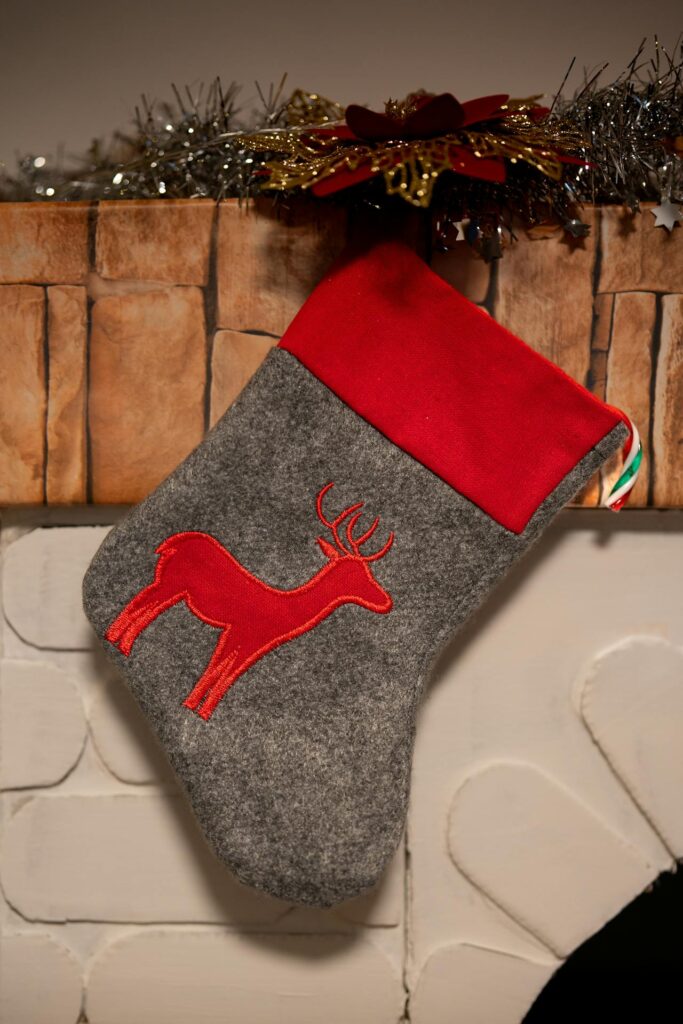
- Felt stockings with appliqué
- Patchwork fabric stockings
- Embroidered names on plain stockings
- Decorated paper bags (for the craft-challenged)
Shop-Bought Stockings
Pros:
- Ready to go
- Professional-looking
- Can find ones that match your décor
- Easy to buy matching sets for the family
Cons:
- Less personal
- Everyone has the same ones
- Can be expensive for fancy versions
- Another thing to store for 11 months
Where to buy:
- Supermarkets (budget-friendly, job done)
- The Range/B&M (massive selection)
- John Lewis (if you’re feeling fancy)
- Independent Christmas shops
- Etsy (for personalised options)
- Garden centres (surprisingly good Christmas sections)
Stocking Filler Economics: The British Parent’s Dilemma
Let’s talk about the elephant in the room: stockings can get expensive. What starts as “just a few little bits” somehow becomes £50 per child.
Budget Breakdown
The Minimal Approach (£10-15 per stocking):
- Pound shop finds (they’ve actually got decent stuff now)
- Chocolate selection box
- One small toy
- Tangerine
- Basics sorted
The Standard British Stocking (£20-35):
- Mix of toys and treats
- Some useful bits (socks, pants—yes, really)
- Books or magazines
- Selection of sweets
- Bit of tat from the Christmas aisle
The “We’ve Gone Overboard” Stocking (£50+):
- Tech accessories
- Multiple toys
- Fancy toiletries
- Gift cards
- Books
- So much chocolate they’ll be sick by 9am
Money-Saving Tips
- Start buying in January sales – next year’s stocking fillers at 70% off
- Keep a stocking box – collect bits throughout the year
- Pound shops are your friend – genuinely good value
- Make some items – homemade fudge, biscuits, bath bombs
- Books from charity shops – often look new, fraction of the price
- Beauty samples – those free magazine samples work perfectly
- Set a budget and stick to it – otherwise it spirals
Stocking Traditions Across the UK
England
Most English families hang stockings on Christmas Eve, to be opened first thing Christmas morning—often before parents have had coffee, which is why we look so rough in Christmas morning photos.
Scotland
Traditionally, New Year (Hogmanay) was bigger than Christmas in Scotland, but Christmas stockings have become popular. Some Scottish families do stockings on Christmas morning and “first-footing” gifts at New Year.
Wales
Welsh traditions include leaving out treats for the Mari Lwyd (wassailing horse skull—long story), but stockings follow similar patterns to England.
Northern Ireland
Christmas Eve or Christmas morning stockings, often with both British and Irish influences in the traditions surrounding them.
The Rules of Christmas Stockings (Unspoken But Universally Known)
Every British family knows these rules, even if nobody’s ever said them out loud:
- Stockings are opened before breakfast – no exceptions
- You can’t wake parents before 6am (though kids will try)
- Everyone opens together – no sneaking downstairs early
- The tangerine stays in the toe until everything else is out
- You must act surprised and grateful even if you’re disappointed
- Wrapping stocking presents is optional – most don’t bother
- Adults deserve stockings too – it’s not just for kids
- The stocking is separate from main presents – different vibe entirely
Breaking these rules? That’s how family arguments start at 6:30am on Christmas morning.
Adult Christmas Stockings
Here’s the thing nobody tells you about growing up: adult stockings are brilliant.
What Goes in Grown-Up Stockings
Practical Treats:
- Nice socks (you’re old enough to appreciate good socks now)
- Fancy toiletries
- Coffee or tea selections
- Kitchen gadgets
- Phone accessories
Indulgent Bits:
- Mini bottles of spirits
- Posh chocolate
- Lottery tickets or scratch cards
- Magazine subscriptions
- Luxe beauty products
Silly Stuff (Because We’re Not THAT Grown-Up):
- Novelty items
- Desk toys
- Funny mugs
- Ridiculous Christmas jumper accessories
- Those magnetic poetry things nobody uses but everyone loves
Partner Stockings
Filling your partner’s stocking is a lovely tradition:
- Inside jokes made physical
- Things they’d never buy themselves
- Thoughtful little surprises
- Yes, pants and socks count (welcome to adulthood)
When Did Christmas Stockings Become This Big?
Honestly? They’ve got a bit out of hand.
Stockings used to be genuinely small treats—an orange, some nuts, a wooden toy if you were lucky. Now kids expect iPads in them (exaggerating, but only slightly).
Why has this happened?
- More disposable income – we can afford more stuff
- Marketing – shops have entire “stocking filler” sections
- Guilt – working parents compensating with presents
- Tradition creep – each year we add “just one more thing”
But here’s the secret: kids remember the magic and excitement, not whether there were 5 items or 15. The tangerine and chocolate coins would honestly be enough if we hadn’t created these monster expectations.
Sustainable Stocking Ideas
For those of us trying to be a bit more eco-conscious:
Reduce Plastic Tat:
- Consumables (chocolate, sweets, treats)
- Experiences (cinema tickets, day out vouchers)
- Homemade items (biscuits, crafts)
- Books (from charity shops or independent bookshops)
Reusable Stockings:
- Invest in good quality fabric ones
- Avoid disposable paper stockings
- Hand them down through generations
Ethical Fillers:
- Fair trade chocolate
- Sustainably sourced toys
- Support small businesses
- Charity gift cards
The Pet Stocking Phenomenon
Yes, we’ve started doing stockings for pets. We’ve lost the plot, but it’s quite sweet really.
Popular pet stocking contents:
- Treats and chews
- New toys
- Catnip for cats
- Fancy collar or lead
- Pet-safe festive treats
Your dog doesn’t know it’s Christmas, but they’ll enjoy the extra treats. Your cat will ignore the toys and play with the wrapping paper. As is tradition.
The Bottom Line
Christmas stockings are magic, aren’t they? That bulky sock at the end of the bed that means Father Christmas has been, Christmas has arrived, and it’s time to wake everyone up immediately.
The tradition might have started with a generous bishop throwing gold through windows, but it’s evolved into something uniquely British—a mix of religious legend, Victorian sentiment, commercial enthusiasm, and the universal childhood joy of presents in a sock.
Whether you’re filling stockings for excited children, your partner, or treating yourself (absolutely valid), you’re part of a tradition that’s been going for centuries. St Nicholas would probably be quite confused by Lynx Africa gift sets and LOL Surprise toys, but I reckon he’d approve of the spirit behind it.
So this Christmas, as you’re stuffing that tangerine in the toe and wondering if you’ve bought enough chocolate, remember: you’re not just filling a stocking. You’re continuing a legend that started with three sisters, some gold coins, and one very sneaky bishop.
And that’s rather lovely, when you think about it.
Even if you do have to be up at 6am to watch someone unwrap a toothbrush.
Related: Back to UK Christmas Traditions Guide
What’s the best thing you’ve ever found in a Christmas stocking? Or the most disappointing? Share your stocking stories in the comments!